
Summit County Weekly Arrest Reports
The official weekly source is the Summit County Sheriff's Justice Files.
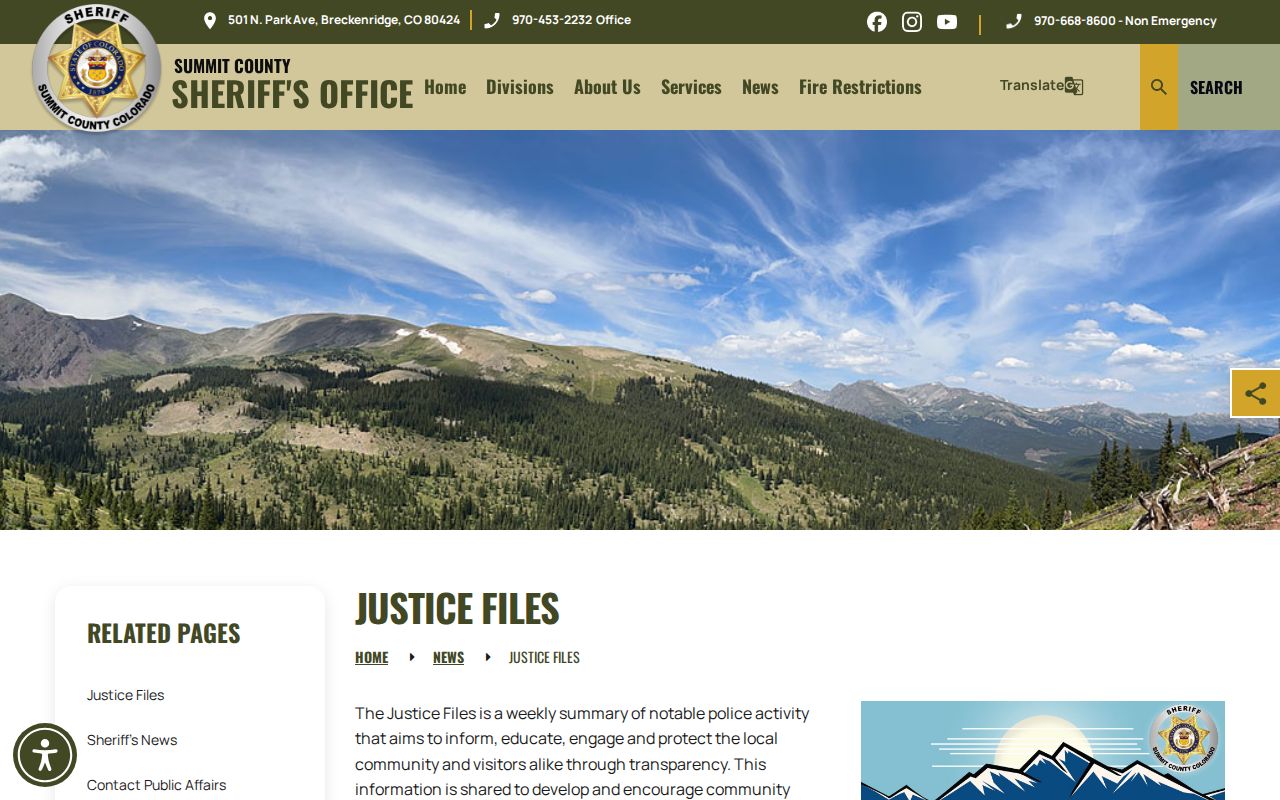
The official page displays the weekly narrative format. Each report is written in paragraphs, not rows. Justice Files groups police and public-safety activity under calendar-week headings. An entry can name the date of an incident, a town or unincorporated spot, what deputies did, the offense under review, warrant activity, and whether anyone was taken to the Summit County Detention Facility.
The view spans days nicely. Still, it is not a booking table. No total count of arrests is promised. Current custody status is not shown either. The Sheriff posts no set hour, refresh interval, lookback limit, or roll-off policy.
Check dates inside each narrative, since publication rarely matches the arrest date. Save the week heading if an entry matters later.
Read Summit County Arrest Narratives
A narrative takes more care than a roster line. One paragraph may fold the call, the place, the agency response, and the result together, so quote the source and keep each stage distinct.
- Select the calendar-week range that contains the known incident date.
- Find the incident date and community, then identify which agency took action.
- Note whether the text says arrest, warrant arrest, summons, citation, detention, or another outcome.
- Record preliminary charge language as an charge, not as a court finding.
- Check separately whether the person went to the Summit County Detention Facility.
- Use detention, VINE, or the court to verify present custody and later case events.
A summons does not mean a jail booking. Nor does a weekly mention prove current custody. Someone named in an older report may have bonded out or been released. They may have transferred or already appeared in court. For a same-day question, the Arrested Today lookup lays out the official fallback steps.
Note: Search by incident date and place first, since one weekly heading can stretch across several towns, agencies, and kinds of police contact.
Summit Arrest Report Details
Justice Files has no fixed field card. Each narrative includes whatever details the Sheriff chose to summarize that week.
| Narrative detail | How to interpret it |
|---|---|
| Week and incident date | The incident date is the better event marker; the weekly range is the publication grouping. |
| Location or community | May identify a town, road, resort, trailhead, courthouse, reservoir area, or unincorporated place. |
| Incident type | Describes the reported event, not a proven offense. |
| Agency response | Can explain which office handled the contact and which office may hold the report. |
| Arrest or warrant action | Shows what the narrative says officers did, but not present custody. |
| Preliminary charge | An charge that may be changed, reduced, dismissed, or otherwise resolved in court. |
| Detention destination | May state that a person was taken to the Summit County Detention Facility. |
| Booking photograph | No routine photo field or guaranteed mugshot display was verified in Justice Files. |
A formal booking file is different. It can hold identifying details, fingerprints, arrest records, a booking photo, and release orders. The two documents relate but do not swap. A court file later sets the formal charges and outcome, which may differ from the first report.
Summit County Blotter Patterns
Justice Files mirrors Summit County's mountain character. It is not a crime-rate measure. Weekly entries can cover traffic and DUI enforcement, warrants, assaults, ski-area or closed-trail activity, search-and-rescue calls, trailhead incidents, fire restrictions, water events, and courthouse encounters. Those categories simply reflect what the Sheriff chose to brief.
Location matters in this county. Breckenridge, Silverthorne, and Frisco each run their own police departments. The Sheriff and Colorado State Patrol cover other areas and duties. A town officer's arrest can produce a town police report plus, if booking follows, a county jail file. Justice Files may summarize the event, but the agency that made the report remains the best source for it.
Avoid reading trends into a busy week. The narrative is selective and its categories shift. No uniform rule guarantees that every incident appears. A longer report may just mean editorial choice, reporting timing, or agency activity rather than a real rise or fall in crime.
Weekend Summit Arrest Coverage
The calendar-week design has one practical perk. Friday, Saturday, and Sunday events can land in a single report. No guaranteed weekend or holiday catch-up schedule exists, though. Assume nothing will appear at a set hour once the week closes.
Records requests run on a different clock. The Sheriff's records page puts report release at usually 72 hours after an event, with extra time possible over weekends and holidays. That promise covers report availability, not Justice Files publication. Active investigations, legal limits, victim privacy, juvenile status, sealing, and redaction can also shape what gets released.
For current status, call detention or use VINE. Ask the creating agency for the full incident record. The court holds the case result, and these separate routes keep a weekly public-safety item from standing in as a custody history.
Local Summit Arrest News
The Summit Daily local-news section provides county public-safety reporting after the official Sheriff source.
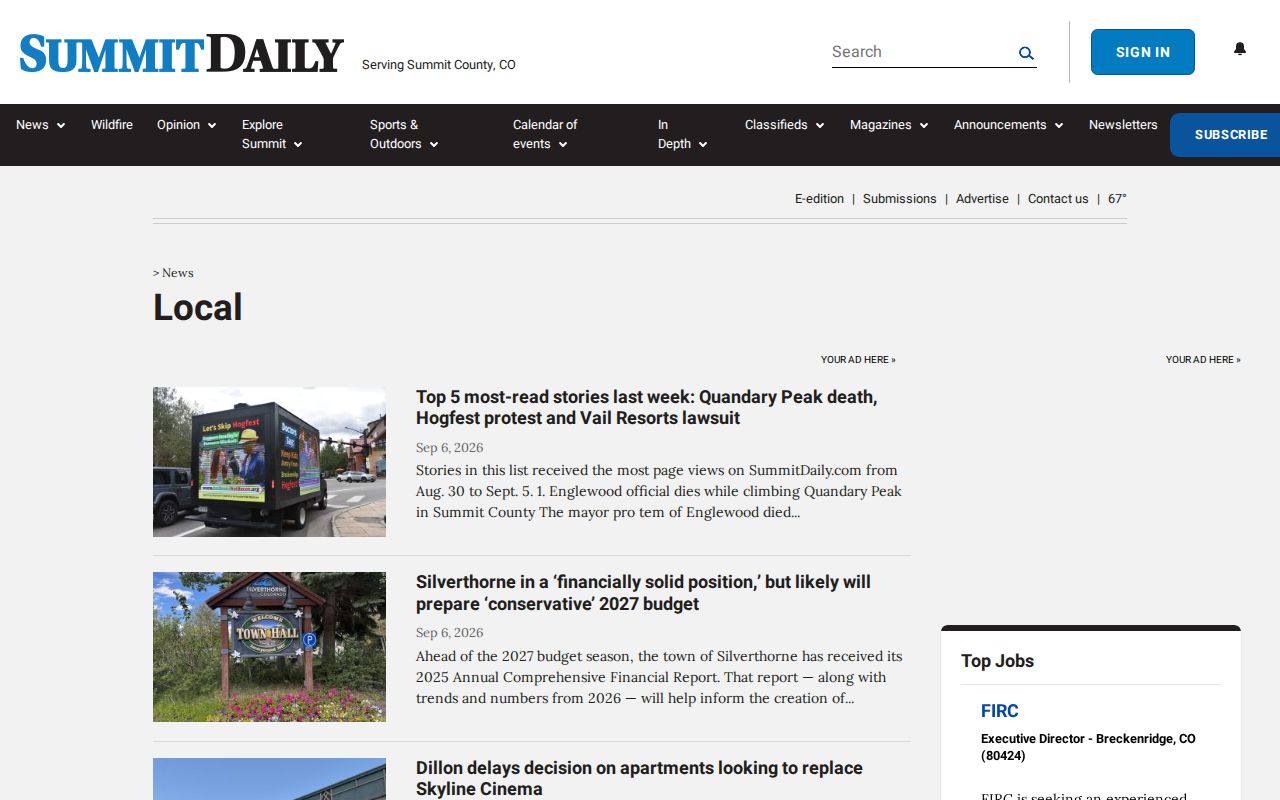
The Summit Daily adds context that a booking list cannot. It is not an official roster, though. Coverage tends to pick selected incidents. Reporters build most stories on a Sheriff's release, a police report, a court record, or a named official, and that attribution deserves to travel with the facts.
Photos are a mixed bag. Some articles run a scene image or an agency courtesy photo, and others run none at all. Treat the paper as news, not a mugshot roster. A missing story proves nothing either way.
The newspaper updates its website as events unfold and generally names a person once formal charges are filed, an editorial practice that differs from the Sheriff's records rules. Use a news story for public context. Then verify with the originating office or the court. None of the major arrest aggregators carries a Summit County local section, and one result that looks like Summit actually points to Summit County, Ohio, not Colorado.
Archive Summit County Arrest Reports
Justice Files promises nothing about permanence. A weekly item can vanish from the public page. The record behind it may still survive with the agency, the jail, a court, or an archive. Web visibility and record retention are different questions. The Colorado State Archives county records page lays out the retention schedules that govern local records.
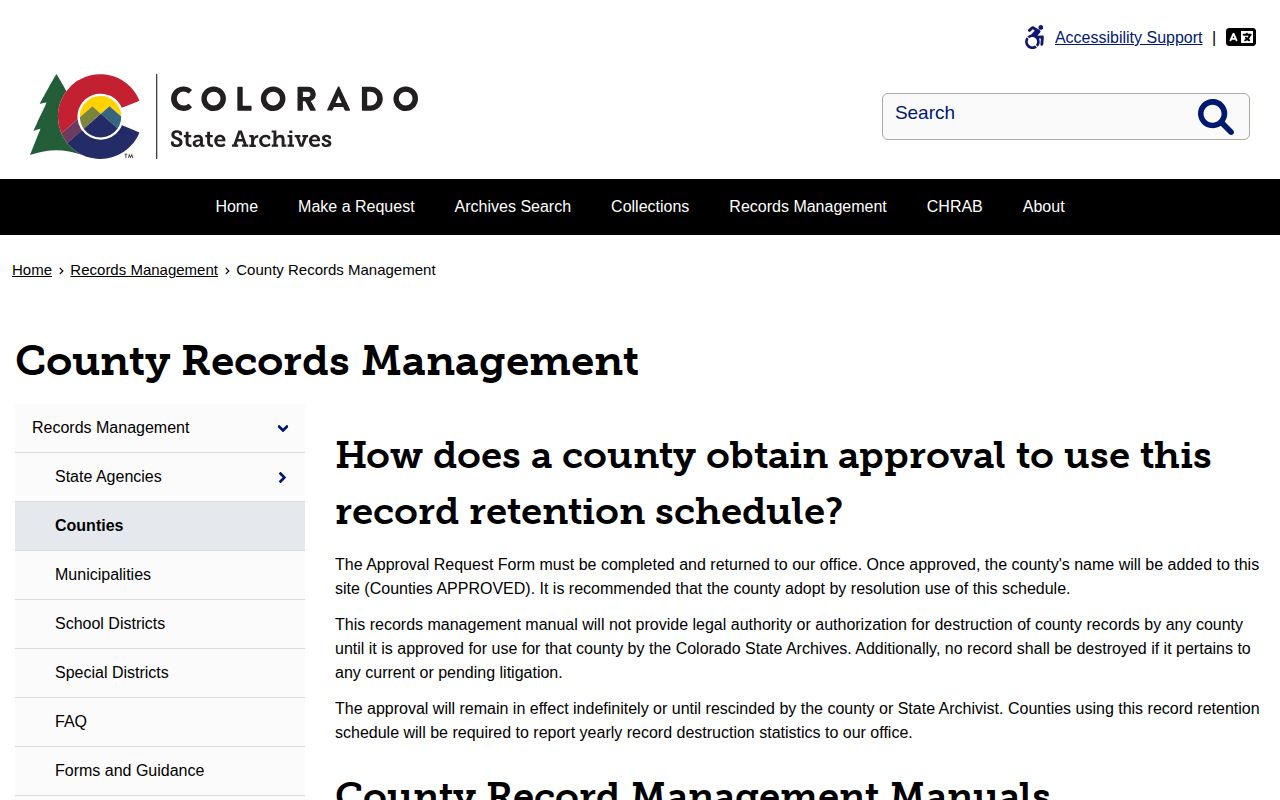
The state model offers record-series guidance only. Summit County is not on the approved Sheriffs list. Do not assume the county follows it.
The model marks daily jail commitment and discharge records as permanent. Booking files get minimum periods that vary by case type. Major felony files and certain other records may be permanent too. Ask the Sheriff which approved schedule governs a file. The answer tells you whether it sits with the agency, moved elsewhere, or was lawfully destroyed.
For older matters, start with the Records Section. Give the full name. Add a narrow date range, the arresting agency, and any report or case number. Request the booking file, the commitment or discharge entry, and the release record. Ask for a photograph only if it is releasable. Then check the court disposition. The Summit Daily archive holds site articles from 2002 onward, with other historic newspaper routes for earlier editions. An article proves publication, not an official record.
Note: A retention period never guarantees public release, since court orders, sealing, active cases, and other legal limits can block access.
Summit Reports Are Not Convictions
A Justice Files entry is a snapshot of one moment. Outcomes live in the courtroom, not the weekly list. A court file shows what the report alone cannot. It includes later changes to the case. Verify any outcome through the Summit County court page and the case file itself. Juvenile and sealed matters are not ordinary public entries. Treat them accordingly. Do not copy photographs or identify protected people from any source.
Summit Sheriff Report Hub Changed
The Summit County Sheriff's Office now runs a standalone website with a newer Justice Files structure. Summit Daily reported the website launch in 2025. Detention details, records requests, VINE, news, and alerts share one hub. Even so, no same-day roster appears there.
Old bookmarks can mislead you. They may point to a prior layout or claim more than the current site publishes. Start at the current domain. A newer site is an access change, not a promise that every historic weekly item migrated over.