
Summit County Recent Arrest Channels
The Summit County Sheriff's Office publishes no searchable public roster and no same-day booking list on its website. That reality shapes every Summit County recent arrest lookup. The official Inmate Services page remains the best first stop. It offers service information rather than a list of names and photos. A current arrest can still be checked. Use the Sheriff's app, the detention phone line, VINE, or a records request. Each route answers a different custody question.
Two time windows serve different needs. Arrested Today walks through the same-day fallback when no official daily feed exists. The Sheriff's Justice Files page offers a weekly narrative of notable activity, not a complete roster. For the broader blotter and older material, Arrest Reports covers those records.
Summit's source landscape shifted when the Sheriff launched its current standalone website. Records, detention, VINE, news, and alerts now sit under one agency domain. Centralization did not create a public same-day roster, though. Judge each page by its function. News releases cover selected events. Justice Files gives the weekly narrative. Inmate Services supports people in custody. The records form is the route to a releasable written file or booking photo.
| Window | Verified Summit source | What it can establish |
|---|---|---|
| Same day | No public 24/48-hour feed verified | Use detention, app, VINE, and records fallbacks |
| Multi-day | Weekly Justice Files | Selected incidents and alleged charges, not all bookings |
| Current custody | App, VINE, or direct confirmation | Status may change and may lag intake |
Arrested Last Night in Summit
No public same-day web feed exists for Summit County bookings, so there is no fixed posting time to check. Intake takes time. Staff receive the person, confirm identity, log the arresting agency and charges, handle medical or detox needs, classify custody, and arrange court or bond steps. Release can come quickly. Transfer can happen first too. A quiet website does not mean no arrest occurred.
For a time-sensitive check, call the Summit County Sheriff's Office at 970-453-2232 or county dispatch at 970-668-8600. Use the official app too. The VINE Arrest Check covers one person at a time. Give a full name and a narrow date range. A name match alone is never enough. Records staff can say whether a booking record exists and whether it can be released.
Summit Arrest Booking and Release
The Summit County Detention Facility holds 93 beds. It books roughly 1,100 arrestees a year. The average daily population sits near 30. Those are jail numbers, not crime statistics. Staff manage intake, classification, detox and mental-health needs, transport, extradition, and court security. The Sheriff notes that one-third or less of the people housed there are convicted and serving a sentence. Everyone else is in custody while a case remains open or in another non-sentenced state.
Bond is not a case outcome. The Sheriff's bonding page lays out cash, card, bonding-agent, and personal-recognizance paths. Qualifying for personal-recognizance or cash release should not require bond-related fees, the office says. Once required conditions are met, Colorado law provides a six-hour release rule. Electronic monitoring can stretch that to 24 hours. The timing is no promise for every Summit booking. Holds and court terms still matter. Identity checks and other lawful conditions can too. The official detention page shows the facility's booking and pretrial role.
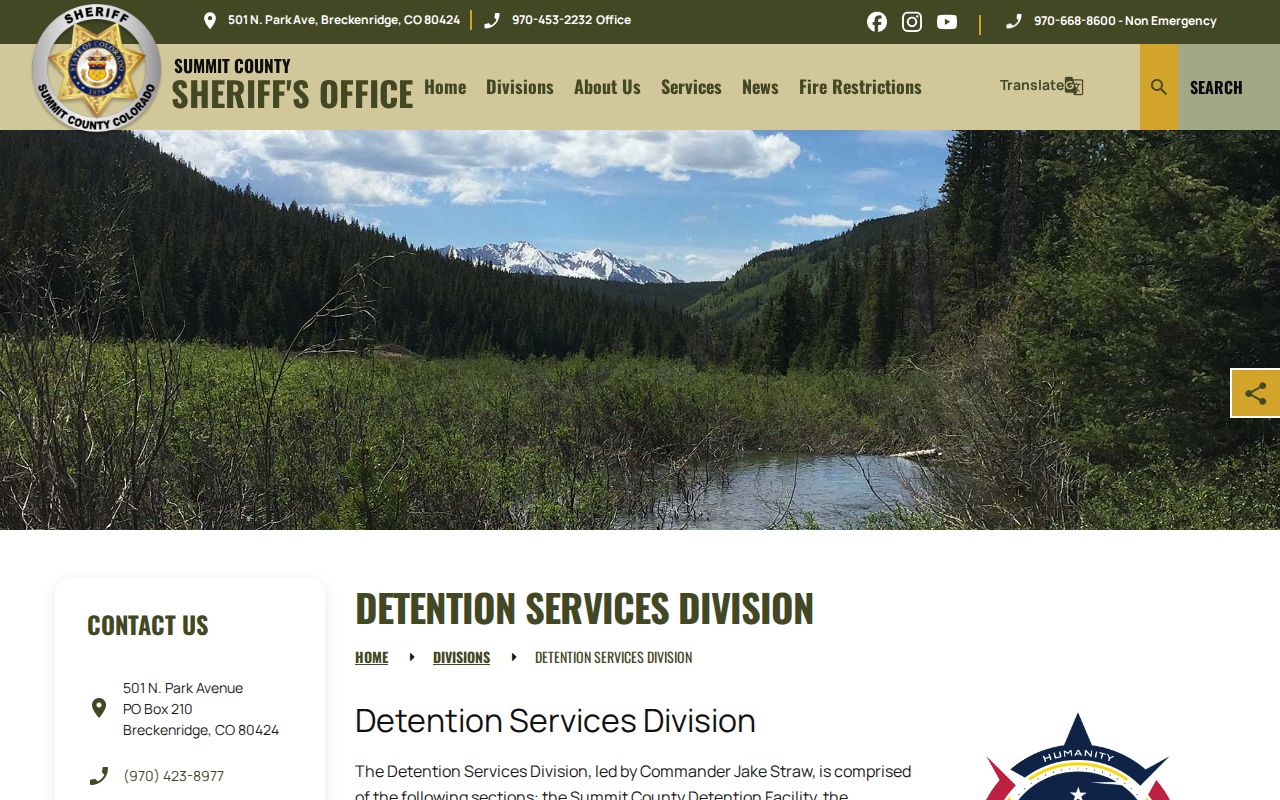
This operational context matters for anyone searching. The jail manages custody; the court file tells the rest of the story.
Summit County Arrest Roster Limits
The Sheriff's current website posts no stable roster URL, no search schema, and no update schedule. It states no retention window either. The official Detention Services page describes the Summit County Detention Facility and its intake work. Inmate Services covers practical services instead. Neither page is a roster. The official mobile app separately advertises "Inmate Search and Services." It may show what the site does not. The Sheriff's official app listing displays the mobile service used for inmate access.
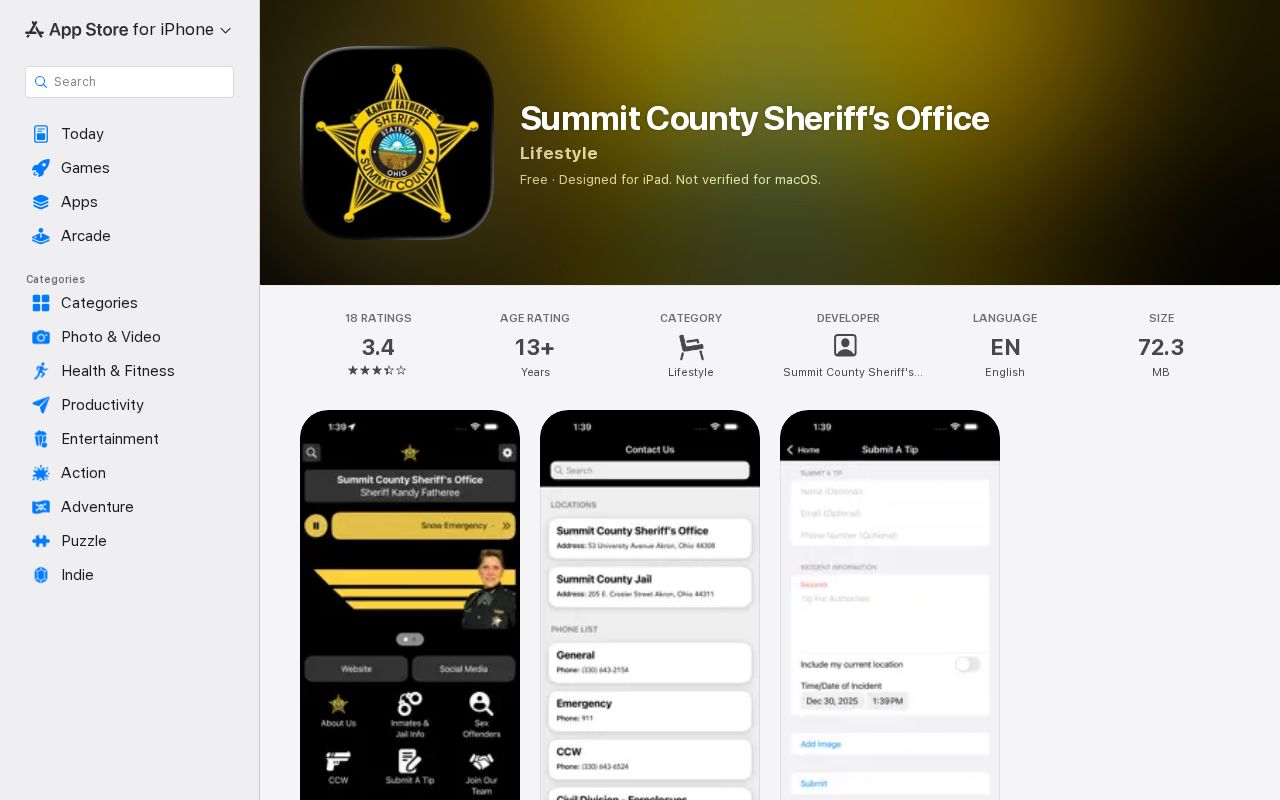
The app channel is real. It still guarantees no complete booking list or photo set.
| Search detail | What is verified |
|---|---|
| Name | Useful for app, VINE, and requests; confirm identity |
| Booking number | May exist in the jail file, but no public format is promised |
| Booking time | Request a narrow arrest or intake date range |
| Photo | May be requested if releasable; no public gallery is verified |
| Status | Confirm directly because custody can change quickly |
- Start with the current Sheriff detention and inmate-service pages.
- Check the official app’s inmate service using an exact name.
- Use VINE for a participating custody-status check.
- Call detention or submit a records request when the public channels do not answer the question.
Where Summit Arrest Records Appear
Official sources come first because they control the record. The Sheriff holds jail and booking material. A town police department holds its own incident report. The Colorado Judicial Branch holds the court case. Summit Daily News adds reported context, but the major commercial arrest sites carry no Summit County, Colorado section.
| Channel | Official | Photo status | Best use |
|---|---|---|---|
| Sheriff records request | Yes | Booking photo may be requested | Booking file and releasable records |
| Sheriff app | Yes | Availability can vary | Current inmate services |
| Justice Files | Yes | Not guaranteed | Weekly notable incidents |
| Colorado courts | Yes | Not a photo source | Charges, hearings, and disposition |
| Summit Daily | No, local news | Varies by story | Attributed public-safety reporting |
| National aggregators | No | No local coverage verified | Do not treat as current or complete |
The Summit Daily local-news section is the strongest county-local news source in the research.
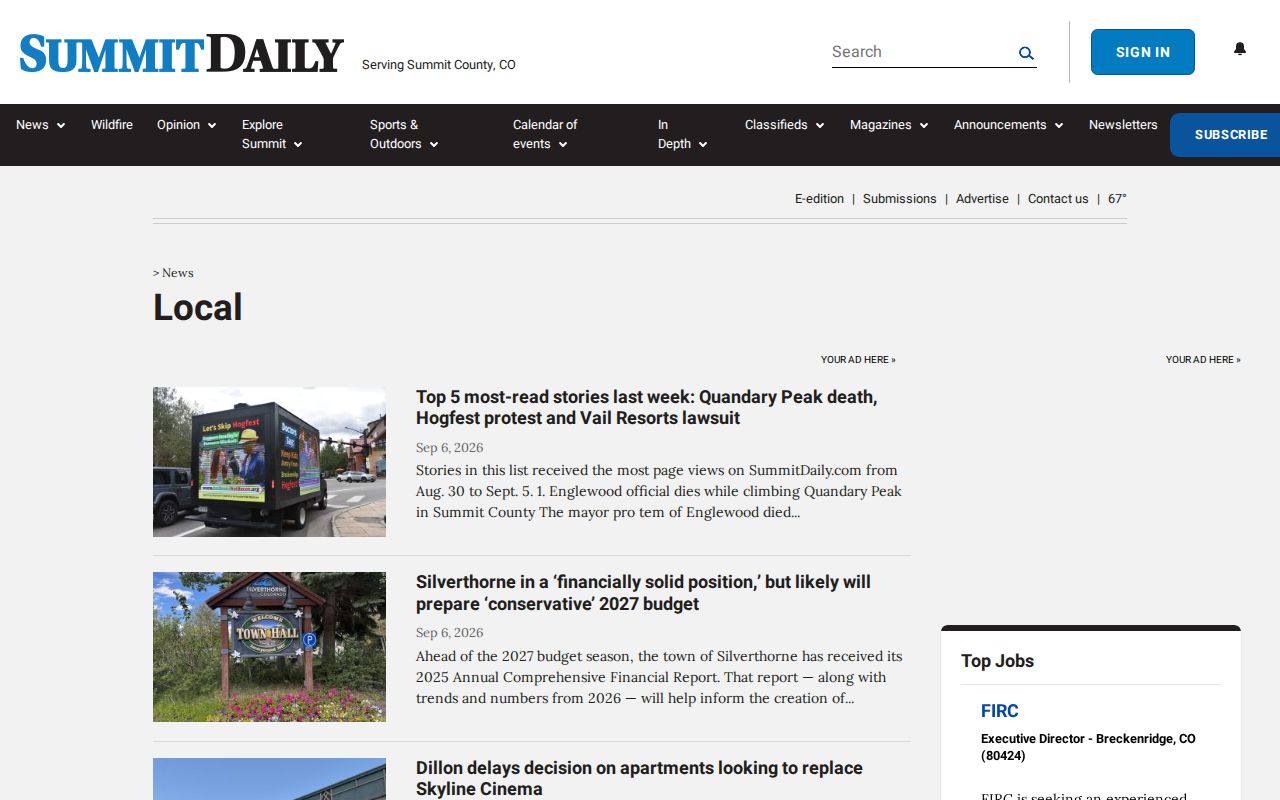
A news story cites police, Sheriff, or court records. Still, each one is selective and can go stale as a case develops.
Recent Arrests by Summit City
A town police file and a county booking entry are two different animals. Plenty of police contact never touches the jail. A traffic citation can end without any booking at all. So can a summons or a municipal stop. Once a custodial arrest lands someone in the Summit County Detention Facility, the Sheriff takes over the jail record, while the arresting department keeps its own report of the incident.
- Breckenridge Recent Arrests: Breckenridge Police records and the county booking path at the Justice Center.
- Silverthorne Recent Arrests: town police records, jurisdiction limits, and Summit County custody.
- Frisco Recent Arrests: Frisco Police reports, the town’s records form, and the county jail route.
Mountain jurisdiction takes some sorting out. In Silverthorne, town incidents belong to the town police. Crashes and highway matters on I-70 and Highway 9 north go to Colorado State Patrol. Several nearby unincorporated communities fall to the Sheriff. Frisco draws the same lines between town, highway, and county turf. Justice Files can pick up resort, trailhead, reservoir, courthouse, and unincorporated events. Stick to one city police source and you may miss the agency that actually made the arrest.
Inside a Summit Arrest Record
A Summit County booking record is really a stack of documents. It is not one tidy online card. The Colorado State Archives model sheriff schedule spells out what booking files can hold. Think identification, mug shots, and fingerprints. Add arrest records and release orders. Classification material, court papers, and other confinement records may sit in there too. A police report can layer on the incident narrative. Later, the court docket adds formal proceedings and disposition.
| Field | What it shows |
|---|---|
| Full name and identifiers | The person recorded; spelling alone does not prove identity |
| Booking number and time | A jail reference and intake event, if supplied |
| Arresting agency | The office that made or referred the arrest |
| Charges as booked | Preliminary charges that may later change |
| Bond or release condition | A current financial or court-set release path |
| Booking photograph | An intake image, if created and releasable |
| Court date | A scheduled event, not the final outcome |
| Release record | Release or transfer from county custody |
- Booking
- The jail intake event after an arrest or delivery to custody.
- Bond
- A court-set condition that may permit release while a case is pending.
- Disposition
- The court’s result, such as dismissal, acquittal, diversion, or conviction.
- Detainer
- A request by another authority affecting release or transfer.
Summit County Mugshot Access
Summit County posts no public mugshot gallery. The Sheriff’s records page lists booking photos as a request category. The category is named plainly, by name. Staff decide whether a requested image can be released. Fees may apply. The Sheriff's app shows inmate information. Its store listing promises no photo for every booking, though. That route is a request process, not a browse page. The CDOC Offender Search sits at a later, separate custody stage. Its public search runs on DOC number, last name, first name, and gender. A Summit County arrest shows up there only if the person later enters state corrections. County booking records and state-prison records answer different questions, so keep them apart. The Sheriff records page remains the verified photo-request route.
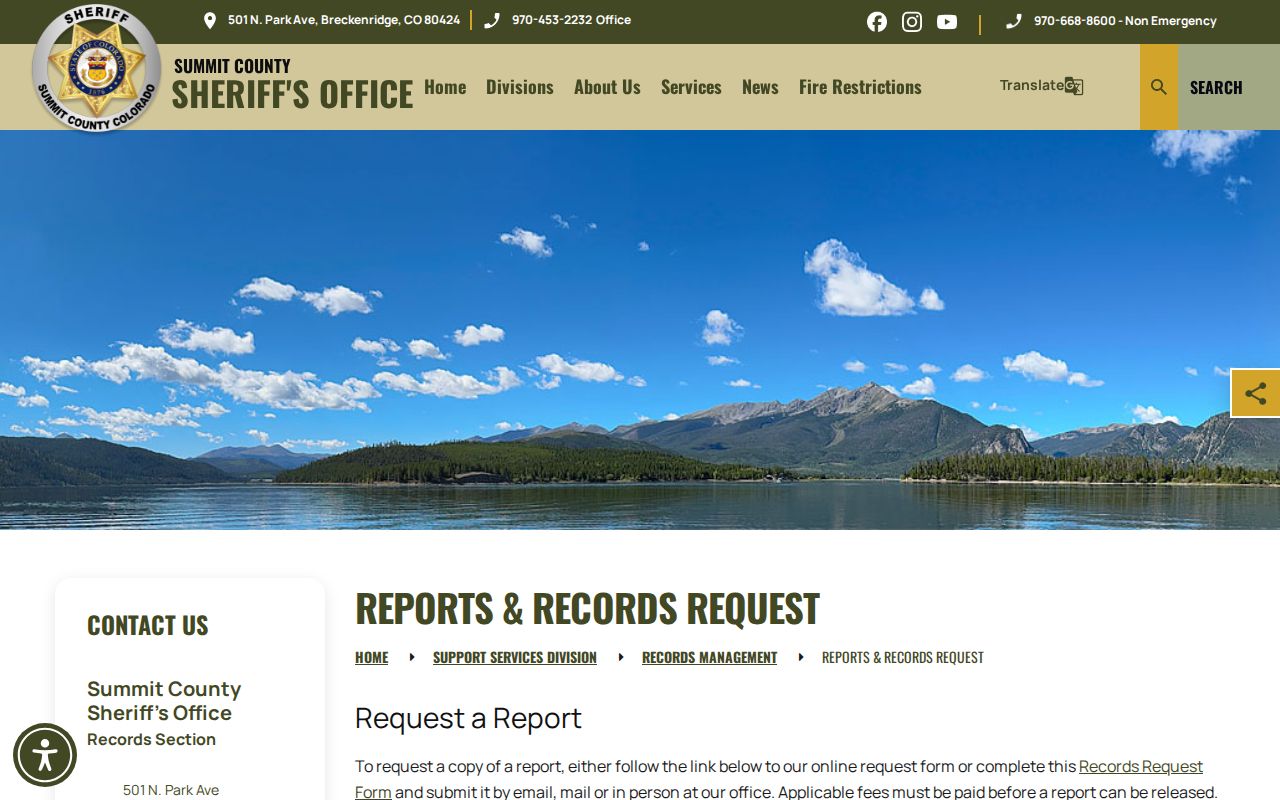
What Summit County offers is a request process, not a gallery of booking photos.
Request Summit County Arrest Records
The Sheriff takes arrest record requests two ways: online or by printable form. Reports, associated documents, and booking photos all go through it. Give enough detail to pin down the right event. No public web card is guaranteed to exist. The Records Section reads email at Records@SummitCountyCO.gov. The page points callers to 970-453-2232 for a records technician. A sidebar separately lists 970-453-3520. Confirm the current line before depending on either number.
- Identify the full name, arresting agency, known date range, and any case or report number.
- Use the Sheriff’s official online form or submit the printable form through the listed channel.
- Ask for the booking file, commitment or discharge entry, release record, and booking photograph if releasable.
- Wait for the custodian’s review of restrictions, redactions, and fees.
- Request the town police report or court file separately when those offices hold the needed part.
The Sheriff records page posts its request prices. A basic record search starts at $10. Incident reports run $0.25 per page, plus staff time after the first hour. Digital media or photographs start at $25. The usual response window runs three to ten business days, depending on workload and legal review. Those are request terms, not a promise of release. Online payment carries its own disclosed cost: $1 for an electronic check, or $0.75 plus 2.25 percent for a card. Check the official form before paying, since fees shift. Frisco's police form shows how record custody splits in practice. It hands over contact and charge information from the town report but sends disposition questions to the Summit County District Attorney. One request rarely tells the whole arrest-to-outcome story.
Colorado Arrest Photo Law
Colorado handles criminal-justice records under rules that sit apart from the general open-records framework. C.R.S. § 24-72-305.5 targets booking-photograph publication. It reins in commercial publishers who charge to take a photo down. The Sheriff still calls whether a particular record gets released. Active investigations and court orders can close the door. So can juvenile rules, sealing, victim privacy, and required redactions.
Sealing and expungement are not the same thing in Colorado. Sealing generally pulls qualifying adult records out of public view. Expungement covers eligible juvenile matters. The Legislative Council Staff memorandum walks through the timing. It also covers the limited access that survives an order. One wrinkle lingers. A search engine can keep an old snippet until its index refreshes. Send a valid court order or corrected source result through the provider's free update process.
How Long Summit Records Last
The Colorado State Archives issued a 2025 model sheriff schedule. It treats the daily commitment and discharge record as permanent. Booking files get different minimum periods depending on case type and disposition. But Summit County Sheriff's Office does not appear on the published approved-Sheriffs list. So call those timeframes a state model, not confirmed Summit policy. The County Records Management page lays out the approval framework. A vanished web page proves nothing about the underlying arrest or booking file. When you ask, name the record series and a date range. If the Sheriff no longer holds the record, ask. Ask whether it was transferred or destroyed under an approved retention schedule. The State Archives search has gaps. A formal Archives request may still be worth filing. And remember, retention never guarantees public release.
Summit Arrest Warrants and Tips
Summit County publishes no searchable warrant database. The Sheriff's site carries no standing most-wanted list either. Justice Files posts and press releases sometimes name warrant arrests. Those items never add up to a full index. Suspect a warrant is active? Ask the right court clerk or consult a licensed attorney. The Colorado Judicial Branch Summit County page opens the court and docket routes you need. A third-party name match proves nothing about an active warrant.
The Sheriff's anonymous tips form exists to hand information to law enforcement, not to check whether a warrant exists. Never approach a person described as wanted. Call 911 for an emergency. For anything less urgent, the official non-emergency channel takes a safe report.
After a Summit County Arrest
What follows a booking varies. Bond review may come first. Then comes arraignment, the court stage where charges and a plea are addressed. Later hearings, release, or transfer can follow. The Summit County court page links the docket search, the court records request, and the Justice Center clerk route, marking where a booking inquiry becomes a case-status inquiry. A jail record shows the arrest and custody event, never the final legal outcome.
Pull the docket and case file before drawing conclusions, because charges can be reduced, dismissed, diverted, tried, or resolved by plea.
Arrest → booking and photo → county custody or release → court hearings → disposition → possible sealing or juvenile expungement.
Summit Records Beyond County Custody
Match the custody type to the right record source. The Colorado Department of Corrections search covers people in state corrections, not someone just booked at the Summit County Detention Facility. The Federal Bureau of Prisons locator handles federal custody records from 1982 onward. It offers no public booking-photo field. Federal pretrial custody may mean calling the U.S. Marshals Service or the District of Colorado.
Immigration detention is a different track. The ICE Online Detainee Locator searches only ICE holds, using an A-number and country of birth or exact biographical details. A blank result in CDOC, BOP, or ICE does not rule out a Summit County arrest. The person may be free. County custody, a transfer elsewhere, or a spot outside those systems can all explain it.
Someone still housed in Summit County? Court-date routing is more direct. The Sheriff points callers to Combined Courts at 970-453-2272 or detention at 970-453-2232, extension 1. It also points to 5th Judicial District virtual-court resources when they fit. That route still does not replace the filed court record or a final disposition.
The official CDOC search interface takes a DOC number or name for state-corrections status. Verify every result with CDOC itself.