
Summit County VINE Arrest Coverage
VINE stands for Victim Information and Notification Everyday. The name tells you the mission: custody status plus automated notice. The Summit County Sheriff's VINE page sends victims, survivors, and concerned citizens to the national network. That official referral makes VINE a legitimate Summit County resource. The page promises no separate facility feed and no completeness guarantee. No photo policy appears either.
The live search settles the rest. Pick Colorado on VINELink, then look for Summit County Detention Facility among the participating results. If it is missing, call the Sheriff instead of assuming the person walked free. Participation shifts over time. Data availability can shift too. So treat VINE as one status channel among several, with detention staff and official records carrying the final word. It covers participating state and local custody across Colorado. It never replaces the court docket.
Think of the Sheriff's page as Summit County's front door to the statewide service. It lets users obtain custody information and register for automated notices rather than watching a static arrest list. The referral is useful for families and victims. Anyone planning around a release or transfer will also lean on it. Still, it is not an emergency tool. Do not use a custody match to guess why someone is held.
Check a Summit Arrest on VINELink
Start with the Colorado VINELink search for one named person. Spelling matters. The documented workflow also accepts a near-exact last name plus at least a first initial. Searching all facilities helps when a transfer is possible. Two people can share a name. Match every identifier before trusting a hit.
- Open VINELink and choose Colorado as the state.
- Select the offender search and registration function.
- Choose all facilities or a named participating facility when Summit County is shown.
- Enter the last name and at least the first initial, then review possible matches.
- Open the correct record only after comparing the available identifiers and facility.
A blank result can mean several things. Intake may still be underway, or a fast release may have happened. The county feed may lag. The person could sit in a different system, or the recorded spelling may differ from yours. When the status search does not settle it, the county-wide Summit County arrest access paths explain how to request the booking record.
The Sheriff Inmate Services page rounds out the picture. Check it alongside VINE for the local service context.
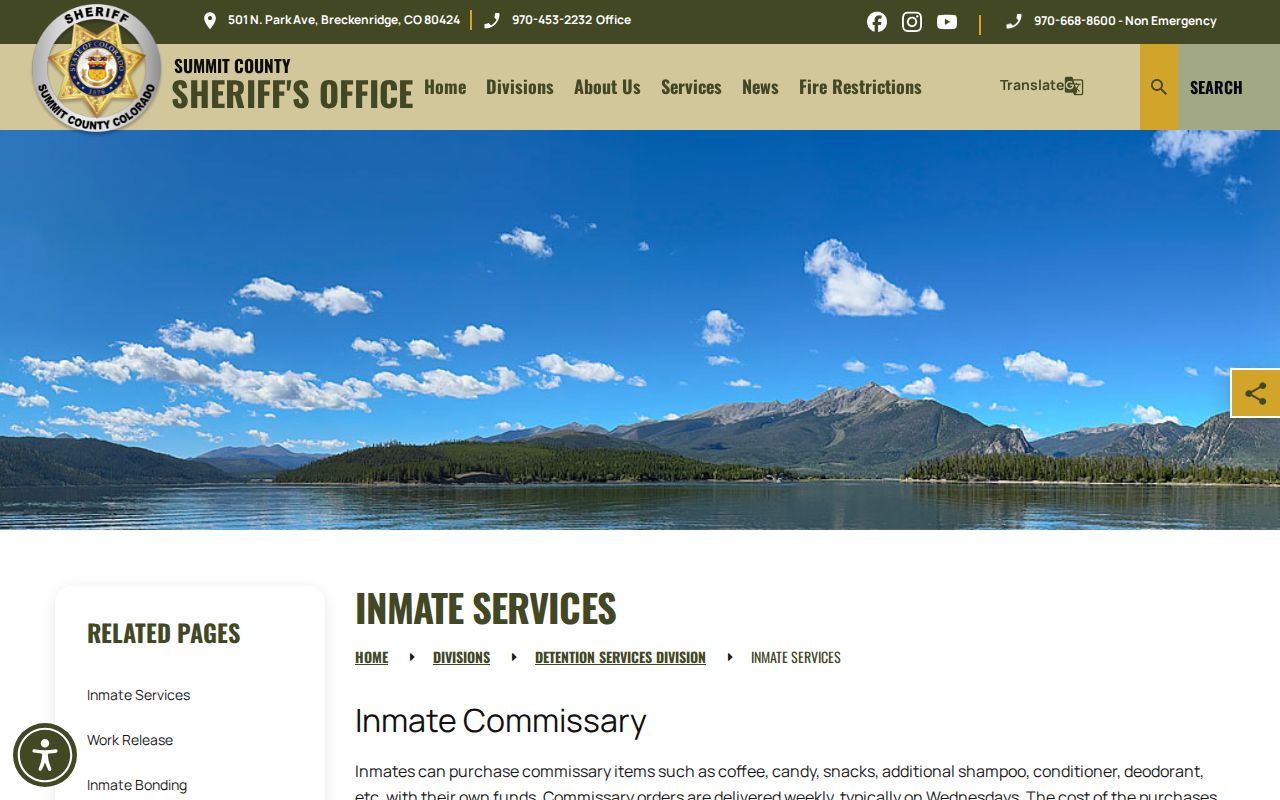
The current Sheriff Inmate Services page offers no stable public name roster or same-day booking feed. That gap is why direct confirmation matters.
What Colorado VINE Results Show
VINE is built for custody and notification, so its record is narrower than a booking file. The fields vary. Each agency sends what it sends. Treat every field as a live status clue, not a full account of the arrest or the court case.
| Result item | How to read it |
|---|---|
| Name | Match carefully with other identifiers; it does not by itself prove identity |
| Offender or record ID | A service identifier that may help separate similar names |
| Custody status | The most recently reported participating-agency state |
| Facility | The reporting jail or corrections location, when supplied |
| Notification option | A control for registering a contact method for future change |
| Custody event | May include release, transfer, escape, or death under Colorado program materials |
VINE never shows a final charge result. It only tells you whether a person is in custody at a Summit County facility. For the actual case outcome, use the Colorado Judicial Branch docket and court file.
Register for Colorado VINE Alerts
Registration for Colorado VINE is free and anonymous, according to the official program brochure. Sign up online or call 888-263-8463. Alerts can arrive by phone, email, text, or TTY. Phone and text users choose a four-digit PIN to confirm receipt and manage the registration.
- Open the matched person’s details and select the registration control.
- Choose phone, email, text, or TTY as the notice channel.
- Enter the requested contact information. Use a contact you can monitor.
- Create and retain the four-digit PIN when the chosen channel calls for one.
- Save the registration confirmation and follow the program’s instructions for later changes.
The Colorado user guide says a lost registration can be found again by the phone number or email address used. Keep those details private. Alerts may cover release, transfer, escape, or death. Which event types appear on one record depends on the participating source.
Phone alerts may keep calling until the right PIN is entered, depending on the program flow. Pick one you can recall. Skip anything easy for others to guess. Email and text delivery depend on your provider, signal, filters, and the data sent from the custody source. Registration confirms a request for notice. Not every change will arrive instantly.
Summit’s Direct VINE Referral
Summit County stands out in one way. The Sheriff sends residents straight to VINE. It hosts no verified web roster of its own. So the alert service here is not a generic statewide suggestion. It is an official channel. After an arrest in Summit County, VINE becomes one of the few online ways to track someone. It follows a specific person in custody. The Sheriff's app and the detention phone line still work as separate checks. The Summit County Sheriff's app listing documents that second official mobile channel.
One caution comes first. Before you register, make sure the record truly belongs to the person you mean. Names get confused. If Summit County Detention Facility is missing from the live facility list, ask detention staff. Confirm whether the person is housed there. Ask whether VINE should carry the status. Picking a similar name just to force an alert invites needless alarm. It also creates nothing reliable.
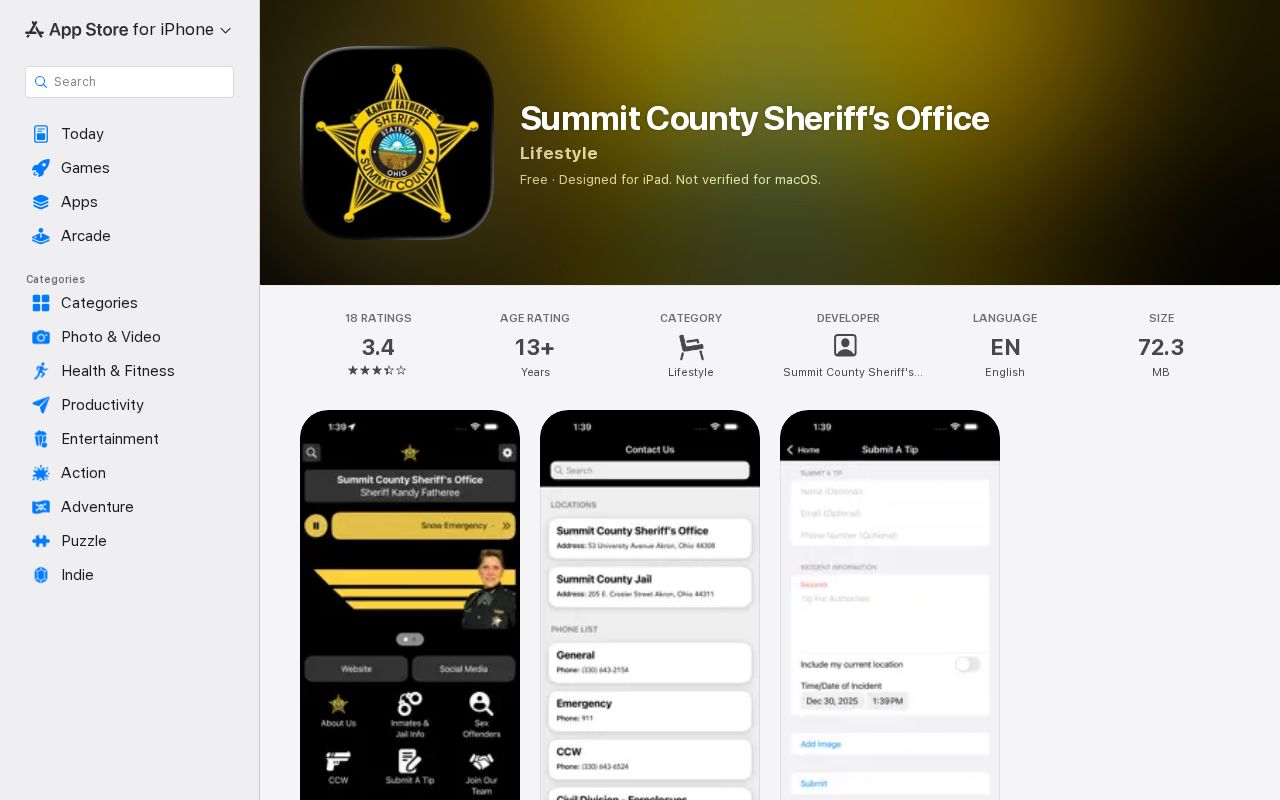
The app pairs well with VINE. Neither source, though, promises that every booking or photograph appears right away.
- In custody
- A current reported custody state, not a judgment of guilt.
- Released
- No longer held by the reporting facility; the court case may continue.
- Transferred
- Moved to another facility or authority, which may require a new source check.
- Disposition
- The court’s final result, which VINE does not decide.
VINE Arrest Check Limits
Fresh Summit County bookings often lag VINE. Identity checks, intake, classification, transfer, and release details all take time to process. The Sheriff's public site offers no verified same-day roster to fill that gap. Try the official app instead. For a new arrest, pair it with the detention line described in Arrested Today. Want the booking file or photo? A formal records request is the stronger route.
VINE also stops at state and local custody. Federal systems sit outside its role. The Bureau of Prisons locator covers federal custody, ICE runs its own immigration detainee locator, and the U.S. Marshals Service handles parts of federal pretrial detention. CDOC is separate too, so a Summit County arrest alone never places a person in that state system.
VINE alerts track custody, not the whole case. That line matters. Bond terms, hearing dates, amended charges, dismissal, acquittal, diversion, and conviction all live in the court record. A released alert means one thing. The reported custody episode changed. It does not erase the booking or close out the arrest record. It says nothing about the final outcome.
Accuracy calls for a paper trail. Write down the date and time of each VINE check. Then call the facility with a narrow status question. Use official records for written proof. A transfer alert pointing to another agency means Summit County may no longer control the live record, so start a fresh check with that agency. This habit keeps a county arrest from being mistaken for state prison, federal detention, or a finished court case.
Confirmation starts with identity. Compare the name and any ID listed in VINE. Note the facility and status, then call the agency named in the result. What if nothing appears? Contact Summit County detention and ask whether intake or a recent release explains the gap. For a written account, request the booking file within a narrow date range. The legal outcome sits in the Summit County court record. Each step answers one question without asking VINE to serve as a roster, police report, or court docket.
Keep registration details current, because an old phone number or email address can strand a valid agency update. When notice is critical, review the saved confirmation, test that messages are not blocked, and still call the facility before acting on a release or transfer notice.